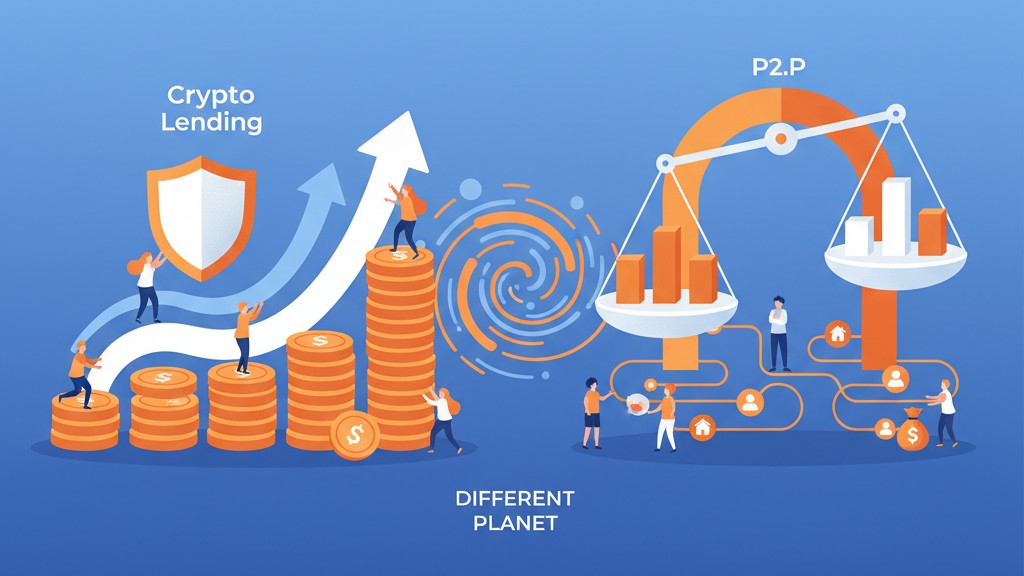
In 30 seconds
- Yield source: P2P platforms pay interest from business or consumer loans to identifiable borrowers. Crypto platforms pay from trading collateral, staking rewards, or liquidity-pool incentives - speculative demand, not loan contracts.
- Custody: P2P: your investment sits in a segregated client-money account or direct claim against the borrower SPV. Crypto: your assets sit in a wallet (self-custody) or with a third-party custodian or smart contract (code risk).
- Regulation: ECSP and MiFID II licences govern P2P origination and investor conduct. MiCA (in force December 2024) governs token issuers and exchanges but does not create deposit insurance or audit smart-contract code.
- History: Celsius froze withdrawals July 2022; BlockFi halted November 2022 - both filed Chapter 11 after counterparty defaults and token-price collapses. No regulated EU P2P platform has followed the same path.
- Grading: The five checks on this site (licence, delivery, yield reality, structure, exits) only apply to platforms that originate or list real-economy debt. We do not grade crypto yield because the risk model is incompatible.
The yield comes from completely different places
A P2P platform rated A+ advertises 14.5-14.9% because businesses borrow at that rate to fund working capital, property development, or invoice advances. You lend, the borrower pays interest monthly or quarterly, you receive that interest minus a platform fee. The yield reflects credit risk - the chance the borrower cannot repay - and loan terms.
A crypto lending platform offering 14% pays from one of three mechanisms: speculative traders borrow stablecoins or Bitcoin to leverage positions (collateral-backed but volatile); staking rewards from proof-of-stake blockchains (protocol inflation, not loan interest); or liquidity-pool incentives that subsidise market-making. None of these involves a business plan, a cashflow forecast, or a regulator-approved credit assessment. The number may look the same. The economic reality is not.
Who holds your money - and what happens if they disappear
EU-regulated P2P platforms with an ECSP licence from the Bank of Lithuania or a MiFID II passport from Latvijas Banka must segregate client funds. If the platform fails, your investment claim remains against the borrower SPV or the loan originator, not the platform's creditors. Mintos holds EUR 600M+ in client assets under this structure; InRento operates an ECSP-licensed buy-to-let marketplace where each property sits in a separate company you hold shares in.
Crypto custody splits three ways. Self-custody: you hold the private keys in a hardware wallet - no counterparty risk, but you are responsible for security and seed-phrase storage. Centralised custodian: the platform holds your crypto in pooled wallets - you trust their solvency and their cyber defences. Smart contract: your tokens sit in code on-chain - you trust the code has no bugs and the protocol governance will not change the rules mid-flight. None of these models carries statutory compensation if something breaks.
What MiCA regulates in 2026 - and what it does not
The Markets in Crypto-Assets Regulation came into force across the European Union in December 2024. It sets conduct rules for issuers of asset-referenced tokens and e-money tokens (stablecoins), requires crypto exchanges to register with national authorities, and mandates segregated custody for client assets held by exchanges. These are disclosure and operational standards, similar in spirit to the transparency ECSP licences impose on P2P platforms.
MiCA does not cap leverage in DeFi protocols. It does not audit smart-contract code for security flaws. It does not create deposit insurance or a compensation scheme for protocol hacks. It does not prevent a centralised lender from becoming insolvent if its counterparties default. The regulation brings crypto services into a legal framework; it does not eliminate smart-contract risk, collateral volatility, or the fact that code can be exploited.
The Celsius and BlockFi era as public history
Celsius Network, a centralised crypto lender offering up to 18% yields, froze all withdrawals in July 2022 and filed for Chapter 11 bankruptcy. Investigations revealed the platform had lent client funds to trading firms that could not repay when markets turned, and had invested in illiquid tokens that collapsed in value. BlockFi, another centralised lender, halted client withdrawals in November 2022 after exposure to FTX and Alameda Research; it also filed Chapter 11. Both platforms marketed themselves as safe yield alternatives to traditional finance.
No EU-regulated P2P platform with an ECSP or MiFID II licence has followed this trajectory. Platforms on our Green list hold loans originated by third parties or direct borrower SPVs, not proprietary trading books. They do not rehypothecate client investments to fund margin calls. The word "lending" appears in both stories; the business models share nothing else.
Why we do not grade crypto platforms on this site
Our grading framework scores five attributes: investor protection from the licence type, delivery track record on borrower repayments, advertised vs realised yield gaps, ownership concentration and transparency, and exit liquidity. Every check requires a real-economy loan with an identifiable borrower, a repayment schedule, and a regulator who audits loan-book quality.
Crypto yield does not come from loan interest. Smart-contract risk has no licence analogue. A DeFi protocol has no single owner to vet for conflicts of interest. Exit liquidity in a token pool depends on other traders, not a secondary marketplace the platform operates. We could invent new definitions and force-fit the checks, but the result would mislead. Crypto lending and P2P lending are not variations of the same product. They are separate asset classes that happen to use the same English verb.
The decision you actually face
If you allocate money to regulated P2P platforms, you accept credit risk (borrowers may default), platform risk (the site could fail), and liquidity risk (you may not exit at par on demand). Your capital is at risk, and no compensation scheme covers borrower defaults. The yield comes from businesses or consumers repaying loans at contractual interest rates.
If you allocate money to crypto lending - centralised or DeFi - you accept collateral-volatility risk (liquidations can cascade), smart-contract risk (code can be exploited), custody risk (platforms or wallets can be hacked), and regulatory uncertainty (rules change). The yield comes from speculative trading demand, staking inflation, or protocol incentives. MiCA improves disclosure; it does not turn crypto into P2P.
Both carry capital risk. Neither is a savings account. The question is not which is safer - it is which risk model you understand well enough to monitor. If you cannot read a smart contract or assess a liquidation threshold, DeFi yield is a bet. If you cannot read a loan agreement or check an ECSP register, P2P yield is also a bet. Pick the one where you can do the homework.
Frequently asked questions
The yields come from completely different sources. P2P platforms pay interest from business or consumer loans with identifiable borrowers. Crypto platforms pay from speculative trading demand, staking rewards, or protocol incentives. A 14% P2P yield reflects credit risk and loan terms; a similar number in crypto reflects collateral volatility, smart-contract risk, and liquidity-pool mechanics. The risk profiles have no overlap.
Celsius (frozen July 2022, filed Chapter 11) and BlockFi (halted withdrawals November 2022, also Chapter 11) were centralised crypto lenders offering high yields from market-making, trading and lending to hedge funds. When counterparties defaulted and token prices fell, both became insolvent. Regulated P2P platforms like Mintos or InRento hold no client crypto, do not engage in proprietary trading, and operate under conduct licences with capital requirements. The business models share only the word "lending".
No. MiCA (Markets in Crypto-Assets Regulation, in force across the EU from December 2024) sets rules for issuers of stablecoins and crypto exchanges, including custody standards and disclosures. It does not create deposit insurance, does not cap leverage in DeFi protocols, and does not guarantee smart-contract code is bug-free. ECSP licences govern loan origination and investor conduct; MiCA governs token issuance and exchange services. Different planets.
Our grading framework scores investor protection from licences, delivery track records on loan repayments, and structural checks on ownership and exits - all designed for platforms that originate or list debt instruments from real-economy borrowers. Crypto yield does not come from loan interest, custody sits in wallets or smart contracts rather than with regulated custodians, and no regulator supervises code. The five checks in our methodology cannot be applied to DeFi or centralised crypto lenders without inventing new definitions. We compare what we can verify.
Keep reading
Risk primer
P2P Risks and Safety
What can actually go wrong when you lend money through platforms, and which risks licences address.
Regulation guide
ECSP and MiFID Licences Explained
What each European licence type covers, what it does not cover, and how to check a platform's register entry.
Platform comparison
Compare All Platforms
Every graded P2P platform in one table: licence, yield, minimums, structure, and the grade that summarises it.
Capital at risk: P2P lending carries the risk of borrower default, platform failure, and illiquidity. Returns are never guaranteed, and no compensation scheme covers loan losses. This guide is educational context, not financial advice. Before committing money to any platform - P2P or crypto - read the risk disclosures and understand what you can lose.